|
Bearing temperature● Operation temperature Bearings work in various applications and environments. In most cases, the operating temperature of bearings is not a problem. But in certain application scenarios Bearings will operate in extreme speed or extreme temperature environments. In such a situation, special attention must be paid not to exceed the limit temperature of the bearing. The low limit temperature is mainly based on lubrication ability. The high limit temperature is usually constrained by materials and/or lubricants, but may also be based on the accuracy requirements of the equipment to which the bearing belongs. The following will introduce these constraints/limitations. ● Material limitations for bearings At temperatures above 120 ° C (250 ° F), standard bearing steel that has undergone standard heat treatment cannot maintain the required hardness of at least 58 HRC. Choosing the appropriate heat treatment process correctly can control the dimensional stability of bearings. Bearings can maintain stable external dimensions at temperatures ranging from -54 ° C (-65 ° F) to up to 120 ° C (250 ° F), and can provide higher stability upon request.
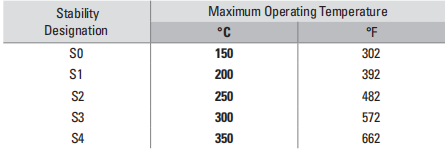
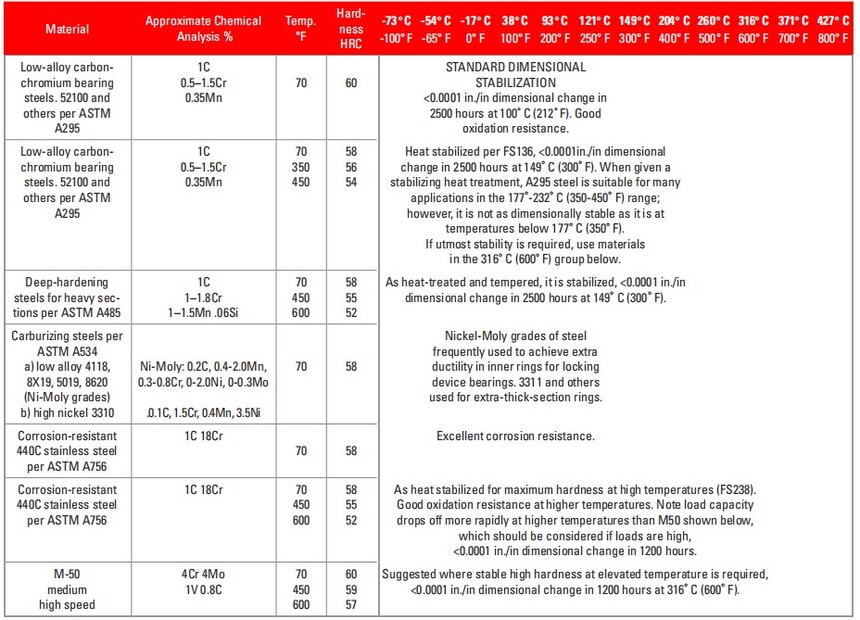
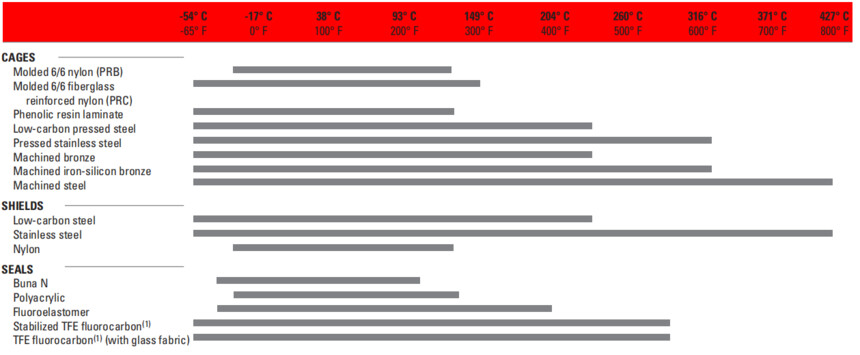
Fig.1. For products that can maintain a stable appearance at high temperatures, their appearance may still change during maintenance due to microstructure deformation. These deformations include the continued tempering of martensite and the decomposition of residual austenite. The magnitude of the change depends on the working temperature, temperature duration, as well as the composition and heat treatment method of the steel. When the temperature exceeds the limit shown in Figure 1, special high-temperature steel needs to be used. Please consult the company's sales representative for specific part numbers of non-standard heat stable steel or high-temperature steel grade products. Figure 2 lists the recommended materials for use in ball bearings, bearing rings, and rollers at various operating temperatures, as well as chemical composition recommendations, hardness recommendations, and dimensional stability information. The working temperature will affect the thickness of the lubricating film and the clearance of the bearing, both of which will directly affect the service life of the bearing. Extremely high temperatures can cause the lubricating film to become thinner, resulting in peaks between surfaces coming into contact with each other. The working temperature can also affect the performance of the cage, sealing ring, and dust cover, thereby affecting the performance of the bearing. Figure 3 shows the materials and operating temperature range of these components. ● Lubrication restrictions The starting torque in grease lubrication applications typically increases significantly at lower temperatures. The starting torque is generally not a function of the viscosity or fluidity of the lubricating grease. It is usually a function of the rheological properties of lubricating oil. The high temperature limit of lubricating grease is usually a function of the thermal stability, oxidative stability, and antioxidant efficacy of the lubricating grease base oil. ● Equipment requirements Equipment designers must evaluate the impact of temperature on the performance of the designed equipment. For example, precision machine tool spindles may be highly sensitive to thermal expansion. For certain spindles, the temperature rise should be controlled within 20 ° C to 35 ° C (36 ° F to 45 ° F) higher than the ambient temperature. Most industrial equipment can operate at relatively high temperatures. For example, gear transmission devices can withstand high temperatures of 93 ° C (200 ° F). Equipment such as gas turbines can operate continuously at temperatures above 100 ° C (212 ° F). However, if the shaft and bearing seat are not machined and heat-treated correctly, the fit between the shaft and bearing seat may be affected during long-term operation under high temperature conditions. Although bearings can work normally at temperatures as high as 120 ° C (250 ° F), setting a temperature upper limit of 80 ° C to 95 ° C (176 ° F to 203 ° F) is more practical. Higher operating temperatures will increase the instantaneous temperature peak and increase the risk of bearing damage. Implementing sample testing according to specific applications can help. To determine the working temperature range, such tests should be performed as much as possible. The design personnel of the equipment should be responsible for weighing all relevant factors and ultimately determining the operating temperature that meets the requirements. Figures 2 and 3 provide standard operating temperatures for ordinary bearing component materials, which are for reference only. Other bearing component materials can be provided upon request.
Fig.2. Operating temperatures for bearing component materials
Fig.3. Operating temperatures for bearing component materials |